
This is where it started.
Enter the world behind The Empathic Art of War.
A book about people, power, and possibility.
Prologue
Before the Strategy, the Wound
The strategy came later.
First came the environment that required attention.
I was a child learning to read the room before I knew there was a name for it.
Behind that door was volatility a child should never have had to experience.
I learned to notice changes in tone, mood, silence and energy. I learned that what people presented and what was actually happening could be two different things. Survival came before strategy.
Years later, I would understand that the same attention that helped me navigate people could also become a burden if I never learned to include myself in what I was seeing.
Nine years old
The Money Game
When I was nine, my mother gave me The Money Game. I did not know then how long that book would stay with me.
It introduced another kind of pattern recognition: money, behavior, framing, and the distance between what something appears to be and what is happening underneath it.
The path
Different systems. The same question.
I served in the United States Army and deployed to Kuwait in support of Operation Iraqi Freedom. After the Army, I entered financial services and eventually worked in wealth management and discretionary portfolio management at Merrill Lynch, Morgan Stanley and UBS.
The 2008 financial crisis, years working with clients in sports and entertainment, building VXchange, and moving into music and entertainment advisory at Shot Tower Capital all put me in different systems with different incentives. The question underneath them kept repeating: what is really happening here?
The turn inward
Understanding is not obligation.
The most important change was learning to apply the same attention inward. Understanding why someone behaves as they do does not require me to keep absorbing the consequences of that behavior.
That is the center of The Empathic Art of War: empathy as a way of seeing more accurately, and discernment about what you do with what you see.
The sound behind the threshold
The Threshold
Original instrumental by Antwyne DeLonde. The opening signature is the same sound used at the front door.
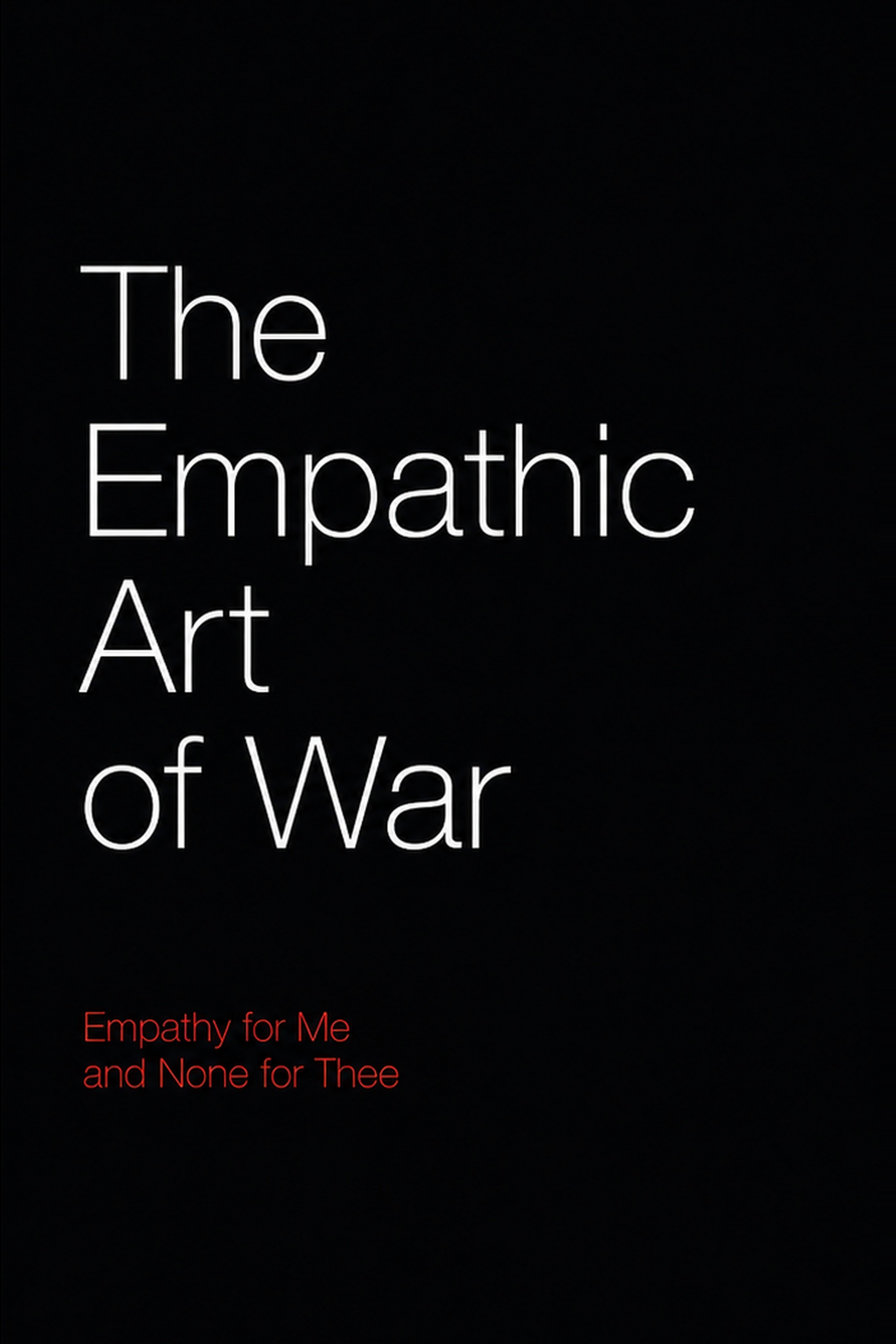
A book by Antwyne DeLonde
The Empathic Art of War
Empathy for Me and None for Thee
By Antwyne DeLonde · Antwyne DeLonde in the press
Empathy is the effort to see a person clearly. Strategy begins when you decide what to do with what you see.
Most books about empathy teach you to understand people better. Few ask what that understanding costs you, or what to do once you have it. The Empathic Art of War is about the second part: how to read people and situations accurately, and then decide where your attention, effort, and accommodation actually belong.
Antwyne DeLonde learned to read rooms long before he had a word for it. That skill went with him onto convoy routes in Kuwait and Iraq as an Army sergeant, into a bank cash vault, and inside a Wall Street firm during the 2008 crash. It also taught him a harder lesson: understanding someone's position doesn't obligate you to surrender your own.
Paperback · ISBN-13 9798163440405 · 92 pages · Revised edition October 2026 (first published October 2024)
From the book
Tools you can use the next day
- The Four Boxes
- Before Force
- The 30-Second Hold
- Disconfirming Questions and a Prediction Journal
- The Three Chairs
- The Emotion Ladder and a Daily Line
- The Capacity Check
- The Direction-of-Benefit Test
- The Pressure Brief
- The Decision Under Empathy Grid
Ideas from the book
Start with one idea.
- What Is Strategic Empathy?
Strategic empathy is the disciplined effort to understand what is driving another person clearly enough to make a better decision.
- Understanding Is Not Obligation
Understanding why someone behaves as they do does not create an unlimited obligation to accommodate them or absorb the consequences.
Inside the book
Chapters
Prologue
What I Learned to See
The book begins with the first lesson about power he remembers, learned at eight years old, and with the habit of close attention that came out of it.
Chapter One
The Instrument
Empathy has been sold as the soft option. This chapter treats it as an instrument, separates it from sympathy, looks at where the habit of reading people comes from, and introduces the first tool, the Four Boxes.
Chapter Two
Building Strategic Empathy
From habit to practice: listening below the words, regulating yourself before you read someone else, five disciplines, and a second pass at the Four Boxes.
Chapter Three
Empathic Leadership in Action
Leadership under pressure, from a deployment to Kuwait. What restraint required, what command failed to see, and the tool Before Force.
Chapter Four
Radical Attentiveness
Every important conversation has an agenda in the room, usually more than one. This chapter is about listening below the words and telling noticing, explaining and confirming apart, and it ends with the 30-Second Hold.
Chapter Five
Test, Don't Confirm
Every read of a person is a hypothesis. This chapter treats what someone says they want as evidence rather than the whole answer, and shows how to look for evidence against yourself, using Disconfirming Questions and a Prediction Journal.
Chapter Six
Perspective Rotation
Projection is not empathy. This chapter looks at what any one vantage point can and can't see, uses Nelson Mandela as its one historical case, and ends with the Three Chairs exercise.
Chapter Seven
Naming What You See
Naming what you feel, as precisely as you can. This chapter looks at a feeling that can pass for safety, what a feeling is actually reporting, and the Emotion Ladder with a daily line.
Chapter Eight
Instrument Maintenance
The instrument is you. This chapter is about wanting a life that doesn't run on constant urgency, staying operational, and the Capacity Check with a weekly look at how you're doing.
Chapter Nine
Influence or Manipulation
Reading people is a skill that can be used on them or for them. This chapter looks at the legitimate use of empathic influence, where the line gets hard to see, and the Direction-of-Benefit Test.
Chapter Ten
Leading Without Authority
Decisions made far above you can reshape the place you work. This chapter separates what you know from what you assume, and what you can decide, negotiate or refuse from what you can't, and ends with the Pressure Brief, four questions for hard moments.
Chapter Eleven
Decisive, Not Cold
The usual criticism is that empathy produces hesitation. This chapter answers it through choices about a career path, leaving one, and the difference between opportunity and commitment, and ends with the Decision Under Empathy Grid.
Conclusion
Valuable vs. Valued
The conclusion returns to the book from his childhood, the difference between being valuable and being valued, “empathy for me,” what each place taught, and the field kit.
Appendix A
Thirty Days of Practice
Thirty days of practice in four stretches: attention, testing, yourself and decisions.
Appendix B
Field Kit Worksheets
Ten printable worksheets, one for each tool.
Continue the story
The book is one part of a longer path through finance, technology, music and the systems people build around one another.